The IP Was Not Included
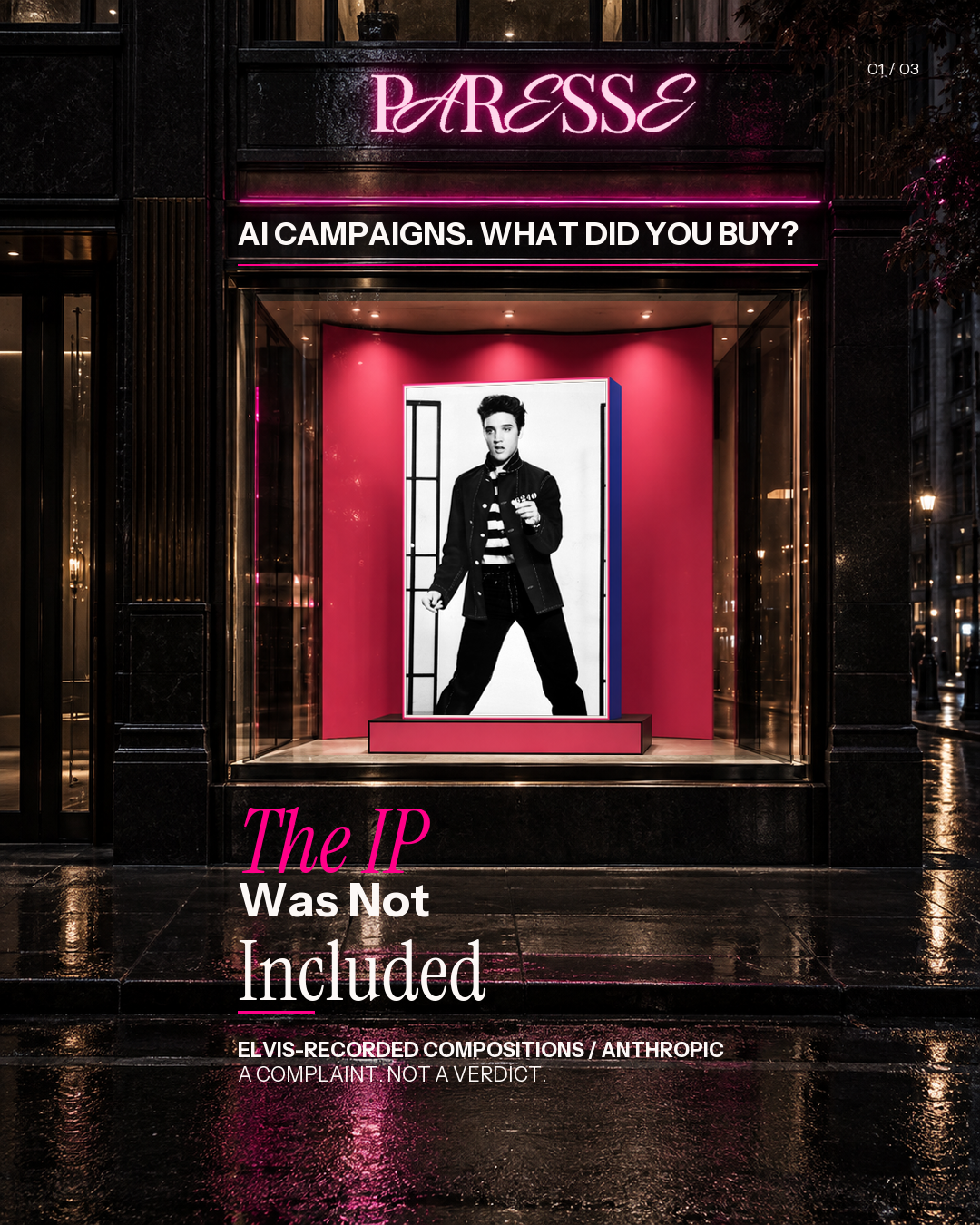
As AI enters the campaign budget, a cheaper image is becoming an awkward test of what luxury actually pays for.
Somewhere between the creative brief and the revised estimate, the photographer has become optional. The campaign still looks expensive. Everyone is pleased with the saving, although nobody seems quite sure what the house was paying for in the first place.
For a business that charges handsomely for a particular way of seeing, this deserves a little more attention than the production budget usually gets.
On 23 October, ABG EPE IP and other music rights holders filed a complaint against Anthropic, alleging unauthorised copying and use, in training and outputs, of 274 musical compositions recorded by Elvis Presley. Anthropic disputes the claims and intends to defend the case. The proceedings concern compositions; permission to use Elvis’s photograph or voice in a campaign is a separate question.
The look everyone recognises
The fashion question begins with what a house expects its images to do. A particular angle, an unlikely casting or a setting that makes a familiar dress look unfamiliar can give people a reason to pay attention. Sometimes that way of seeing becomes part of what they buy.
There is nothing to guarantee that a human commission will achieve this. Photographers can produce expensive wallpaper, and generative tools can produce interesting work. The awkward possibility is that a maison might cut the cost of its campaign while also removing some of what helps justify its prices.
Familiar imagery makes this surprisingly easy. Everyone knows what luxury is supposed to look like, which helps a picture through an approval meeting. Knowing which house it belongs to is another matter. If four competitors could use it with a change of logo, the saving deserves a second look.
The image director needs to work out which contribution gives the campaign its character before deciding which fee to remove.
The archive department would like a word
Then someone says, “We own the archive.”
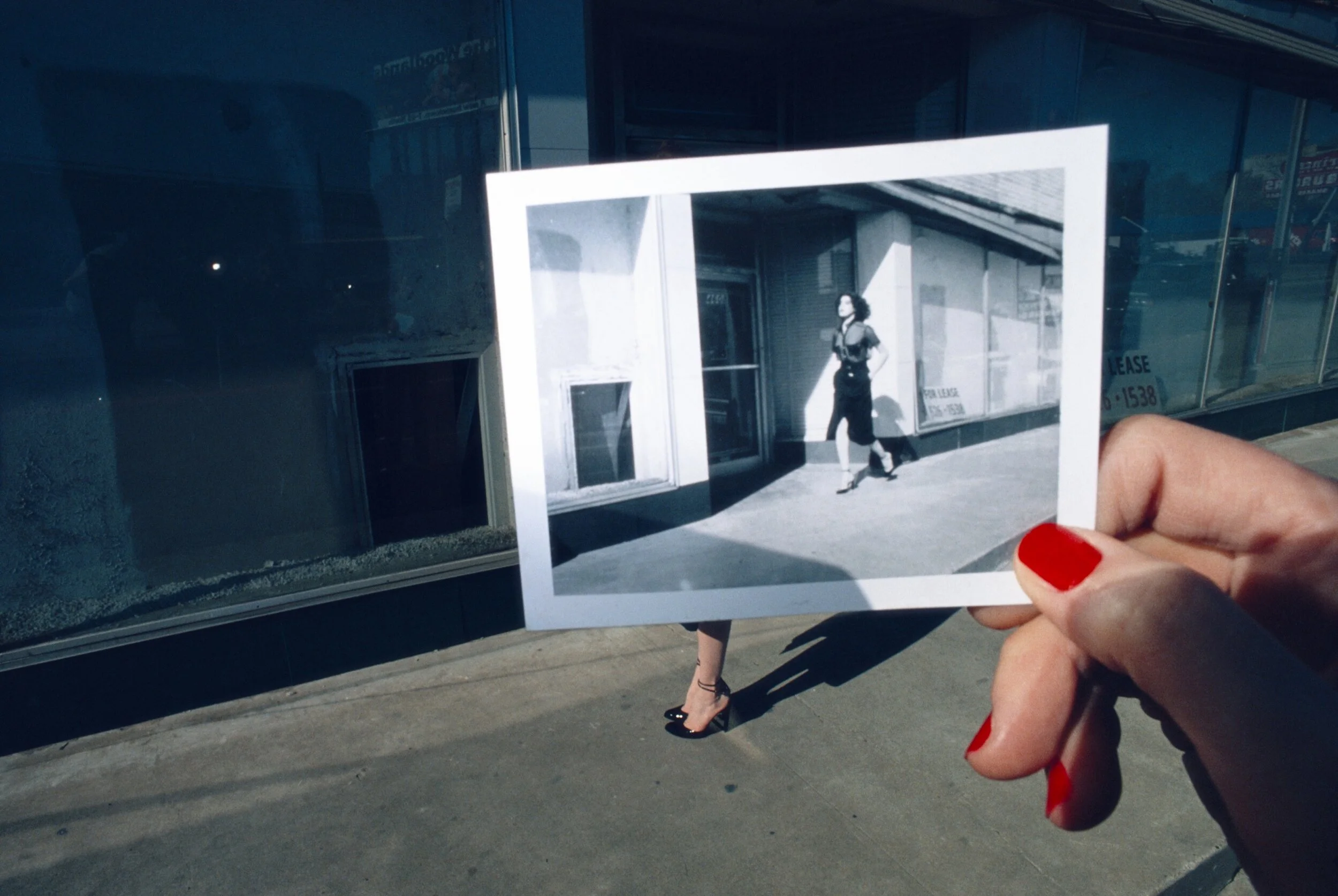
Owning the dress, holding the photograph and having permission to reuse the photograph are different propositions. An archive assembled over decades may contain agreements written for particular territories, channels and uses. Feeding material into a model, transforming it and putting the result into an advertisement each need examination. The original purchase order may have had a rather smaller future in mind.
The same care applies to the supplier’s conditions and the proposed use of its output. A house needs those answers before treating the material as available. Music adds its own distinctions between compositions and recordings, alongside separate questions about voice and likeness.
This work belongs in the estimate. So do selection, review, correction and replacement. The cost of generating an image is a poor guide to the cost of getting it approved and into circulation.
What stays on the invoice
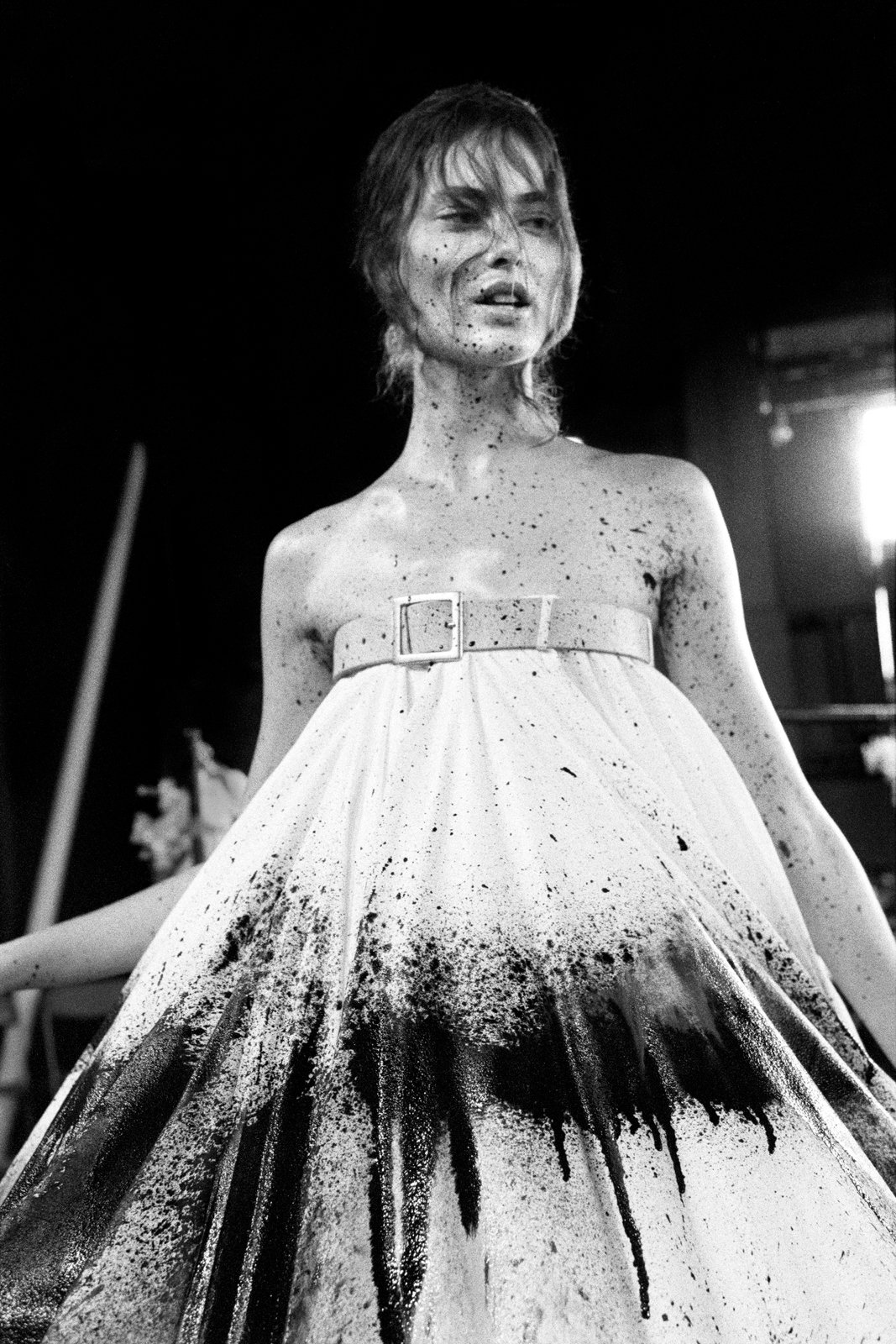
A house can keep commissioning its central campaign from a photographer, filmmaker or other creative partner. It gets a developed point of view and someone with whom to argue about it. That relationship needs a good brief and agreed permissions; it can still be slow, costly or uninspired.
It can also build predominantly around generated production. For functional images and repeated variations, the economics may be attractive. They depend on a suitable provider, usable conditions and results that survive review. A convincing demonstration tells the production director very little about the next hundred assets. Someone must be able to reject them without being told that this defeats the saving.
For a house whose imagery does real commercial work, I would begin by commissioning the defining idea and central images, then using AI for selected adaptations where the permissions and supplier conditions allow it. Pay the creative partner for that arrangement, put an image lead in charge and agree what an adaptation may change. Otherwise, the word can become permission to remake the campaign by degrees.
This keeps the most consequential creative choices with an identifiable author while allowing repetitive work to become cheaper. Where the permissions cannot be established, stay with the commissioned route.
Show it without the logo
Before changing the production model, compare commissioned work and selected AI adaptations against the same brief, privately, using material approved for the process. Public information cannot tell us which will work better for a particular house.
Show the results to the intended audience without the logo. Ask whose campaign they think it is and what led them there. Then compare the cost per approved asset, including rights, review and rework, and the time it actually took to deploy. A folder full of variations is unlikely to impress the finance director once the rejected ones are counted.
Buying, creative direction and measurement have to agree on this calculation. Procurement needs to price permitted uses, creative partners need clear terms for adaptations, and the image lead must remain responsible for what reaches the public.
A product crop does not always need a celebrated photographer. Treating every format as an artistic commission would be an excellent way to make this argument unaffordable. Start with the work that establishes the house’s point of view, then examine what the subsequent versions really require.
The bill can come down. It would be useful to know which part of the value came down with it.