Do You Know Who We Are?
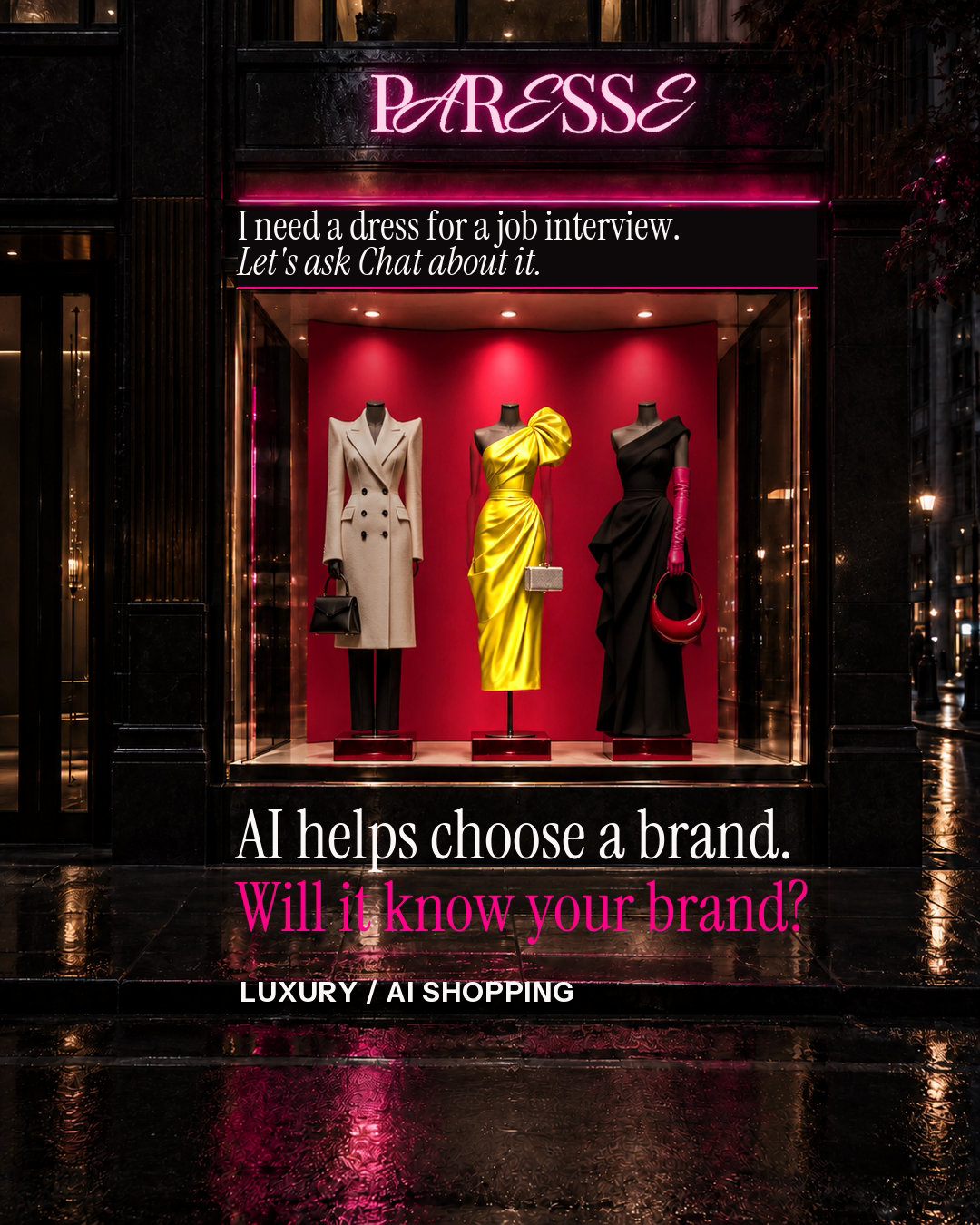
Luxury has spent decades becoming recognisable. What happens when an AI assistant helps decide which brands deserve consideration?
A dress for a job interview, sufficiently assured not to announce how much you want the job.
No designer named. An occasion and a small social anxiety. Excellent conditions for selling luxury.
But if the customer asks an AI assistant, which houses make the shortlist?
Somewhere, a marketing director has just remembered how much the campaign cost.
Two wardrobes, different hosts
According to Vogue Business’s reporting on 10 November, Vestiaire Collective launched an app inside ChatGPT in October, enabling conversational searches and comparisons across its pre-owned luxury inventory. Inclusion in OpenAI’s broader shopping recommendations remains a project.

Ralph Lauren’s Ask Ralph, launched in September 2025 for US app users, recommends complete outfits from available men’s and women’s Polo inventory.
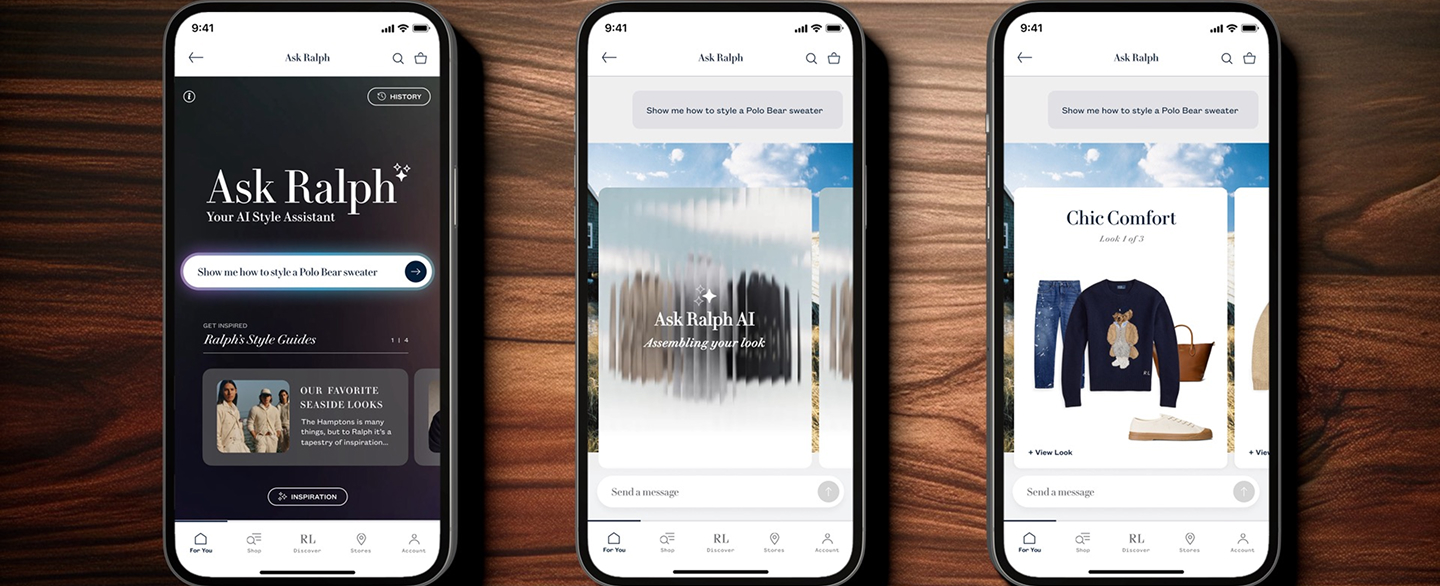
Ralph helps you dress once you have entered his world. Vestiaire opens several wardrobes.
Neither tells us exactly how a general-purpose assistant chooses between competing maisons. They demonstrate that brands and intermediaries are already organising different versions of the conversation.
The consequential moment comes before the customer has chosen a name.
A little more specific than “timeless”
Our hypothesis: a house can be culturally familiar yet poorly represented in an automated recommendation.
A customer may want a particular attitude, silhouette or reference. Can the assistant connect that desire to the house’s actual products? Or does it have only “timeless elegance” to work with?
An expression with an impressive number of employers.
For brand and commercial directors, three investments follow: build a proprietary stylist, integrate with external platforms, or improve the information those encounters depend on.
The first needs an audience. The second brings fees, dependencies and questions about customer access. I would begin with the third, then test external discovery on a limited assortment.
Document what distinguishes the products. Keep availability and service promises accurate. Give someone responsibility for corrections.
Then ask genuine questions that name no brand. Repeat them across assistants. Examine which products appear, the reasons given and whether those reasons survive scrutiny. Compare information improvements with similar untreated products where possible.
Being recommended for a service you cannot deliver is an unusual definition of success.
Count qualified visits, appointments and contribution after returns and service costs. Distinguish new consideration from existing customers taking a shortcut. Better information does not guarantee inclusion, and an unsuitable product should sometimes lose.
Luxury knows how to make an entrance.
It may need to work on getting invited.