The Rest of Hermès Is Not a Waiting Room
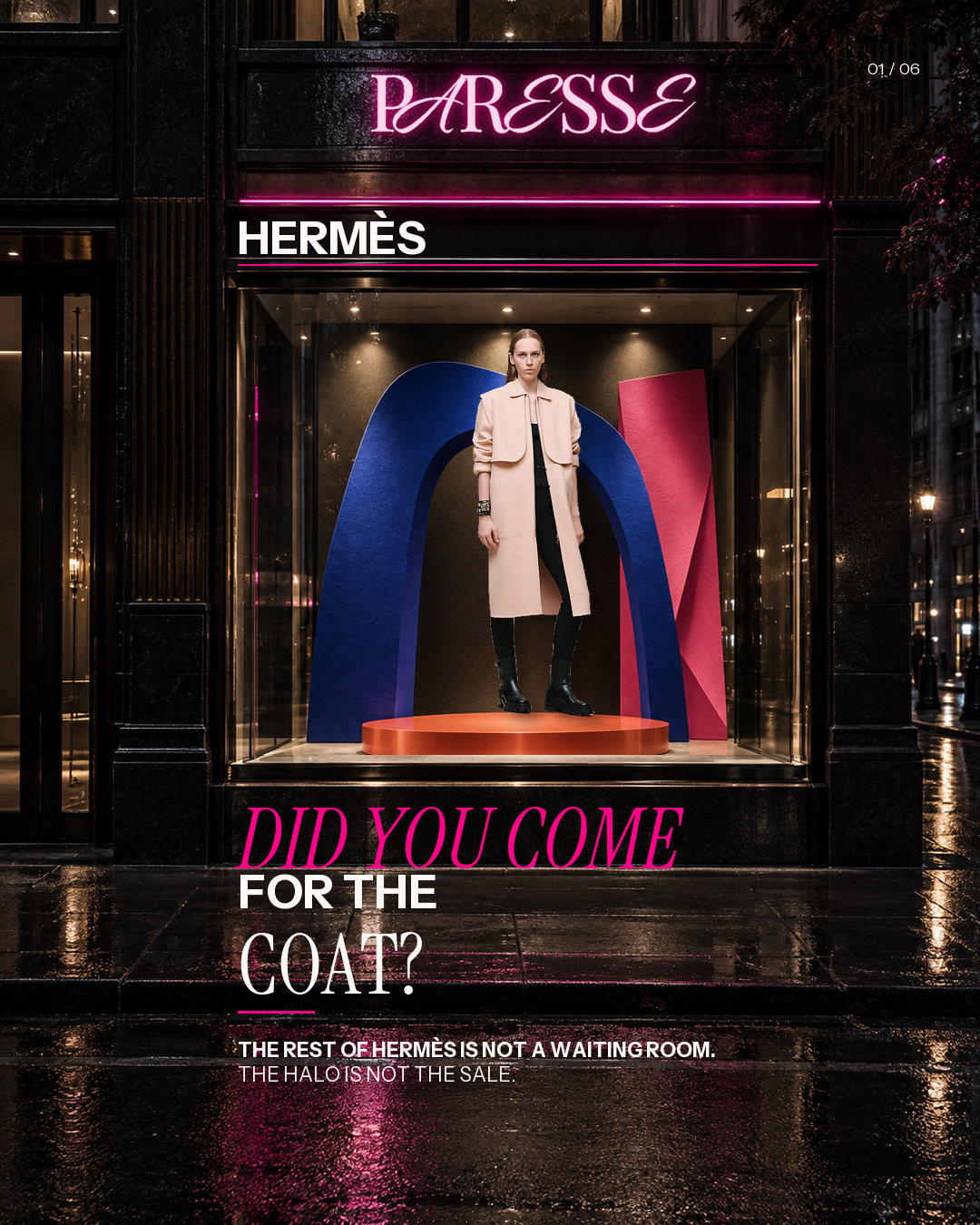
A house can have the most wanted bag in the room. The question is whether anyone came for the coat.
The Birkin has excellent manners. It lets the rest of the collection speak, then becomes the subject of the conversation anyway.
Hermès’s latest results give that familiar imbalance a less familiar form. In the third quarter of 2026, leather goods and saddlery grew 10.8% at constant exchange rates. Ready-to-wear and accessories fell 2%. Group revenue rose 4.3% to €4.096 billion. Hermès, Q3 release, 22 October 2026.
This is not an obituary for the orange box. It is a reason to look inside it more carefully.
The halo is not the sale
The tempting explanation is that the bag is carrying the house. The accounts do not establish that.
Leather goods and saddlery includes considerably more than Birkins. Ready-to-wear and accessories combines clothing with shoes, belts, costume jewellery, gloves and hats. Neither line reveals individual products, customer motivations or the effect of availability. Over nine months, the latter category was still up 0.6% at constant exchange rates. Hermès, revenue breakdown.
One weak quarter cannot diagnose a house. Nor can a strong leather business tell us whether customers are buying more pieces, paying higher prices or finally receiving products previously unavailable.
But the divergence opens a strategic question: how much independent demand does each métier command?
PARESSE’s hypothesis is that an icon’s cultural authority can make the surrounding collection visible without making it necessary. Recognition travels more easily than conviction. Knowing whose coat it is and wanting to wear it are different commercial events.
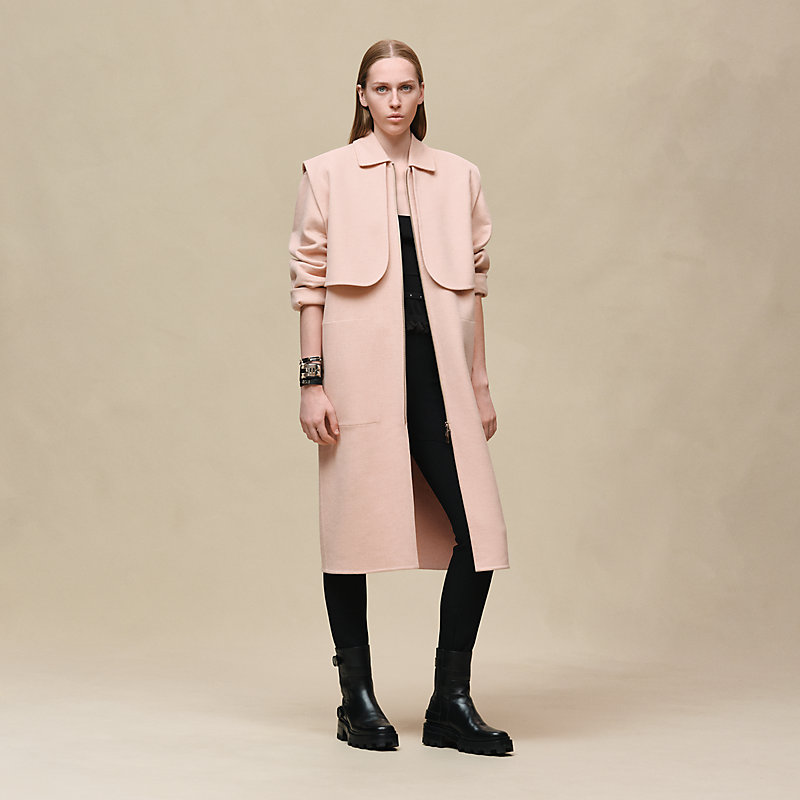
For merchandising and retail leadership, the task is not to make the Birkin less powerful. It is to establish whether the other purchases have reasons to happen without it.
Two things the orange box can conceal
The first blind spot is the basket itself. A customer buying across categories looks like evidence of a successful house universe. Yet transaction data alone cannot distinguish enthusiasm for a wardrobe from habit, gifting or enthusiasm for the relationship with the house. None of those motives should be invented from a receipt.
The second is geography. A global category decline can conceal very different local realities. Reuters reports that finance chief Eric du Halgouet described the Chinese market as particularly difficult. Before declaring a creative problem, Hermès would need to separate regional demand, assortment, stock availability and customer recruitment. Reuters, 22 October.
Otherwise, the house risks redesigning the coat when the problem is where, to whom, or whether it was available to sell.
Three ways to answer
One route is to lean harder into the complete Hermès universe: more cross-category appointments, coordinated silhouettes and introductions between métiers. This could deepen existing relationships without fragmenting the house. It requires stock and advisers capable of making those connections useful. The risk is that a fuller basket disguises, rather than resolves, weak independent demand.
A second route is to give selected métiers more commercial independence within the same house. Clothing appointments would begin with fit, cut and use; shoe appointments with the shoe. Recruitment would include clients without leather-goods purchases. The benefit is a clearer view of what people actually return for. The cost is specialist time, and results may arrive less neatly than a cross-selling target.
A third route is to tighten the offer: fewer references, greater depth behind the strongest pieces, less space committed to uncertain demand. That could improve availability and inventory discipline. It requires reliable product-level evidence. Cut too quickly, however, and a house of discovery becomes a shop of proven winners. Very efficient. Rather less interesting.
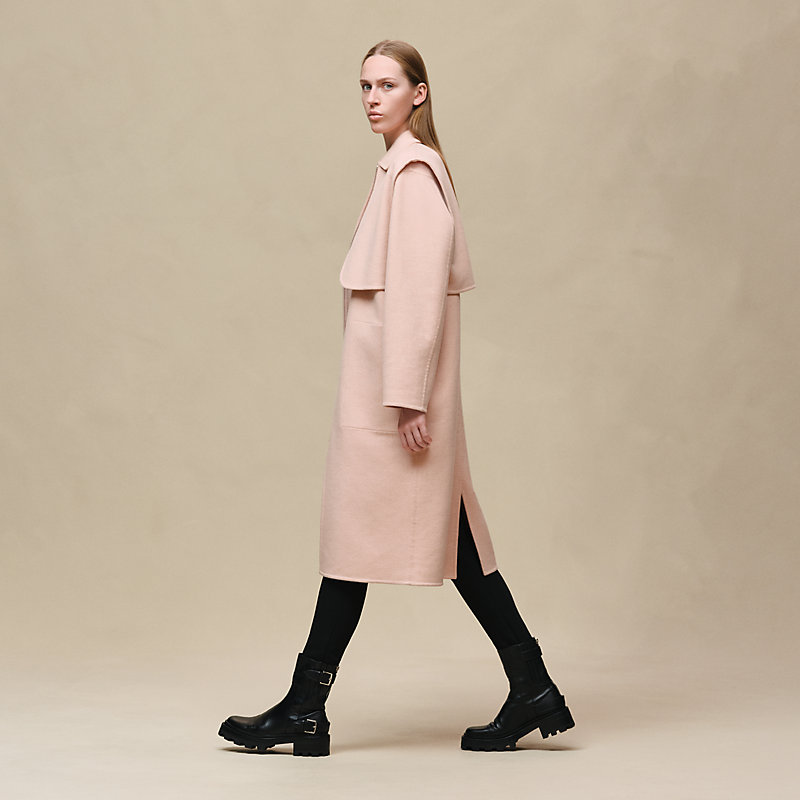
The second route is the strongest hypothesis to test first. It asks a narrower question before imposing a wider solution. It neither assumes that more cross-selling will work nor removes creative breadth before understanding its audience.
A destination, not an adjoining room
The timing matters. Hermès has announced Grace Wales Bonner’s first men’s collection and the introduction of couture by Nadège Vanhée for January 2027. Those are opportunities to recruit for clothes, not merely refresh the scenery around bags. Hermès, management statement.
Start reversibly: selected stores, specialist appointments and a tightly supported edit, compared with similar stores retaining their usual approach. Keep prices unchanged to isolate the effect. Protect product availability and examine category repurchase, contribution after service costs, and purchases by clients without leather-goods transactions. Ask customers why they came back; do not let the database write their inner lives.
This changes assortment, service, client recruitment and measurement before demanding a new campaign. Expand only if the category gains durable demand rather than borrowing another métier’s customers or sales.
The strongest counterargument is that this separates what Hermès deliberately holds together. A maison is not a department-store spreadsheet. Fair. The exercise should diagnose demand, not create rival brands or isolated boutiques.
The objective is not to abolish the halo. It is to check what remains when the light moves.
The Birkin can stay the star. The rest of the house deserves customers who came to see it.