Coperni and the All-Inclusive Deal
An investor who can also sell your collection is a tempting proposition. Before signing, work out who can get the next one made if the relationship breaks down.

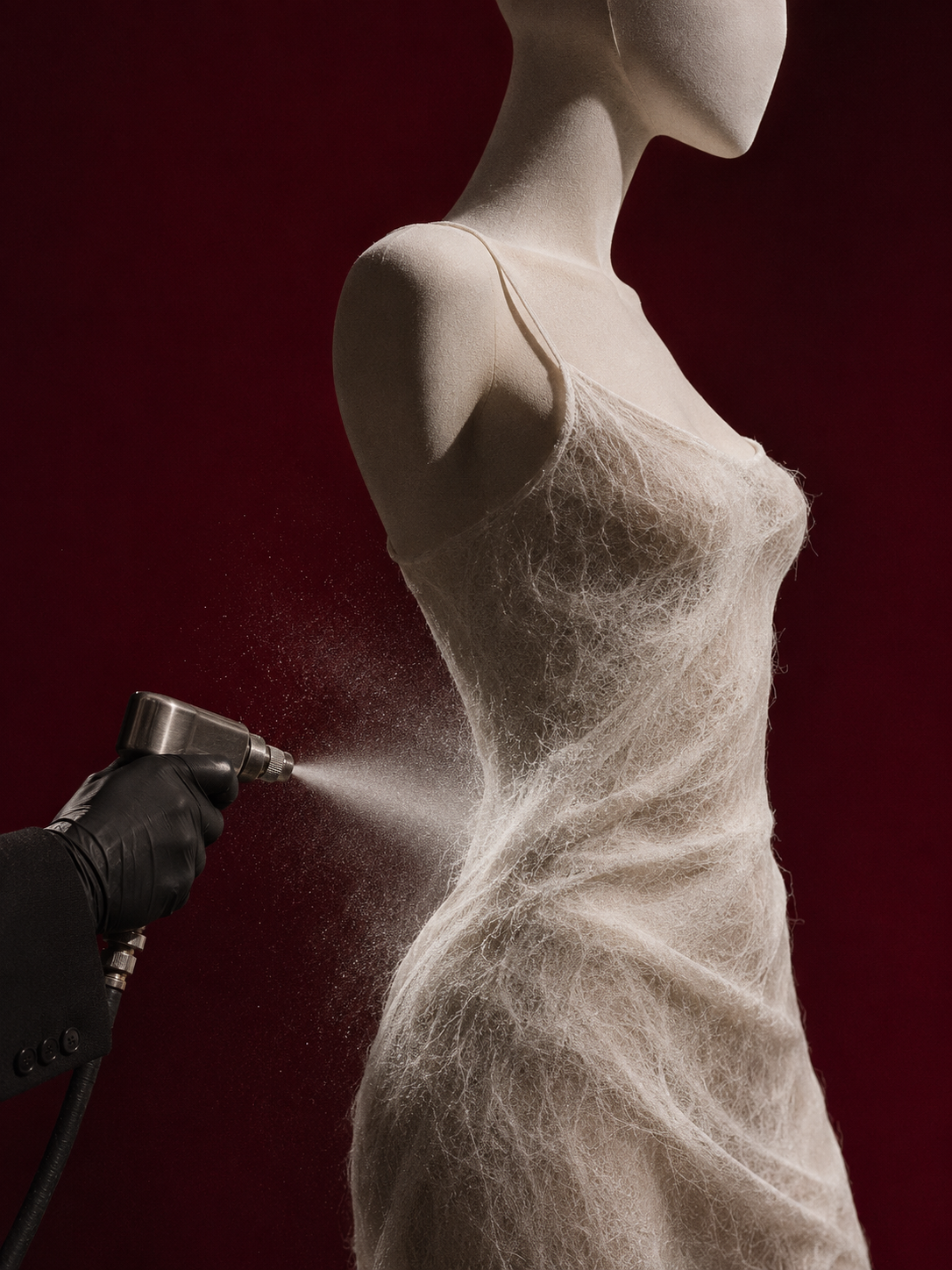
In September 2022, Coperni closed its Paris show by having a dress sprayed onto Bella Hadid. It was an unusually good use of everybody’s attention. Ordinarily, the most suspenseful part of making a collection is the wait between paying the factory and getting paid by the people who ordered it. That rarely makes the show reel. Vogue Business on the show
On 4 November 2026, Sébastien Meyer and Arnaud Vaillant announced that Coperni SAS would cease operations. The French operating company entered receivership in June, and its company record lists judicial liquidation on 29 October. Tomorrow, which had helped relaunch the label, was its majority shareholder and exclusive distributor. The founders said payments were outstanding. Progetto 11, which acquired Tomorrow in March, said it had inherited a broader dispute over ownership and governance and a business short of funding. The founders’ statement and Progetto 11’s account · Coperni SAS company record
The sale notice gives the business two sets of numbers. The figure it labels brand turnover fell from €15.2 million in 2023 to €10.9 million in 2025. The same notice puts the operating company’s turnover at €3.5 million in 2023 and €4.7 million in 2025, with an operating loss of €301,000 in 2025. To understand what happened to demand and what happened to cash, I’d ask for orders by account and season, the payment terms and a ledger showing when the money actually arrived. Archived sale notice
A second showroom can only do so much
There are good reasons to take an all-inclusive deal. A young house gets a sales network and operating support without having to build both at once. Tomorrow’s former investor describes a business that combined investment, distribution and production services. For a label with a small team and a collection to sell, those capabilities can be worth considerably more than a cheque. Three Hills’ description of Tomorrow
Coperni’s wholesale proceeds flowed through Tomorrow, according to Vogue Business. That arrangement raises a question any founder can ask before signing. How many shops can carry your clothes while a single company still controls when you see the money? A second showroom may win orders for the next collection while receipts from the last one are still tied up. And if the right to switch kicks in after buyers have allocated their budgets, the label may have to wait another season to use it. Vogue Business on the wholesale arrangement
What I’d take into the negotiation
A single partner can be the right choice if it brings committed working capital and access to buyers the label could scarcely reach alone. It offers speed and one team to coordinate. I’d ask for a funded seasonal budget, access to invoice records and a payment schedule that fits the production calendar. Even then, a dispute can interrupt sales and financing together.
Separating the investor from the distributor makes either easier to replace. It also puts more work on the house. Someone has to manage buyers, reconcile orders and forecast cash, and the label needs independent financing to carry those orders through to payment. That flexibility can be expensive for a business still counting every sample.
I’d start with a narrower exclusive deal. Give the distributor the markets or accounts where it has a clear advantage, for a defined term. Keep a manageable set of direct accounts. Agree in advance who can access orders, contact buyers and handle stock during a handover. Set aside cash or secure a credit line the house can draw independently. This buys the label a way to keep operating while a replacement gets up to speed. The strongest case for broader exclusivity is that it may be the price of the only offer that actually funds production. That is worth weighing against the full cost of keeping a fallback.

Put a collection through it
Before signing, run the same season week by week under each deal. Imagine a label starts with €150,000, has €280,000 due in factory deposits, freight and payroll over eight weeks, and expects €160,000 in receipts. On that illustrative timetable, it finishes week eight with €30,000 if the receipts arrive and faces a €130,000 shortfall if they slip beyond it. The cash gap could be larger earlier, depending on when bills fall due.
Then run weaker orders with payments on time. Check what each style earns after returns and markdown support, which pieces the house can afford to produce, and when a replacement showroom could realistically see buyers. If the fallback cannot cover the cash gap in time, reduce the first production run or renegotiate the payment calendar before the factory asks for its deposit.