Armani: The Licence Wants a Seat
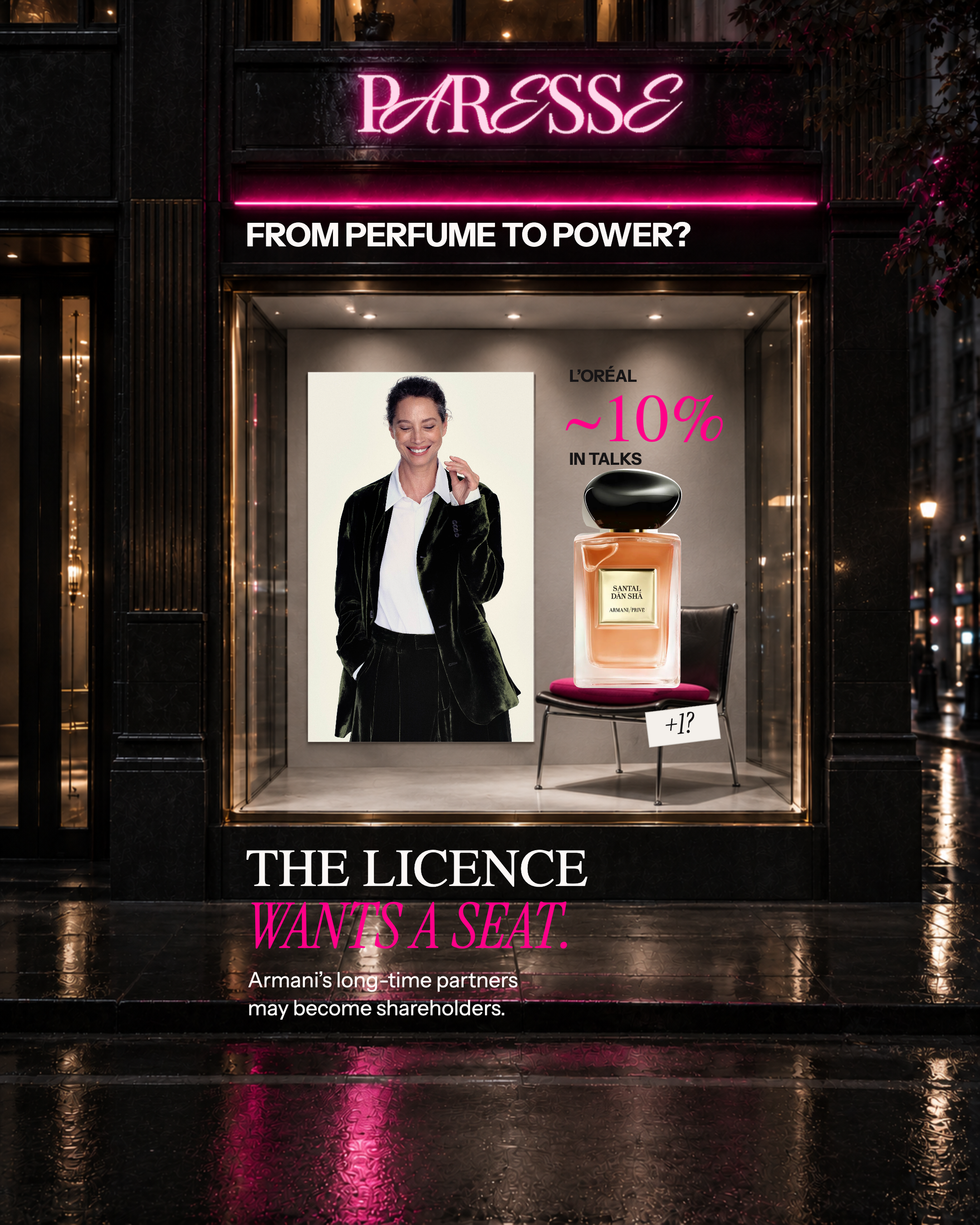
A familiar name. A new relationship.
The Armani on a perfume counter and the Armani on a runway share a name. They don’t ask the customer for quite the same commitment.
Now the companies selling the fragrance and the glasses may become shareholders.
Reuters reported on 27 November that L’Oréal was discussing around 10% of Armani, EssilorLuxottica 2–3%, and some heirs another 2–3%. No final agreement had been reached. Reuters.
Which Armani are we investing in?
Long-standing partners bring something valuable: they know how people recognise, desire and buy Armani.
That knowledge could support its next chapter. It could also make the familiar version particularly persuasive.
Our hypothesis is that the important negotiation concerns how much room the house retains to evolve.
A successful fragrance may benefit from associations built elsewhere in the wardrobe. A new collection may need time before those associations become commercially useful. Reading each category separately could miss that exchange.
The bottle and the jacket share more than a logo.
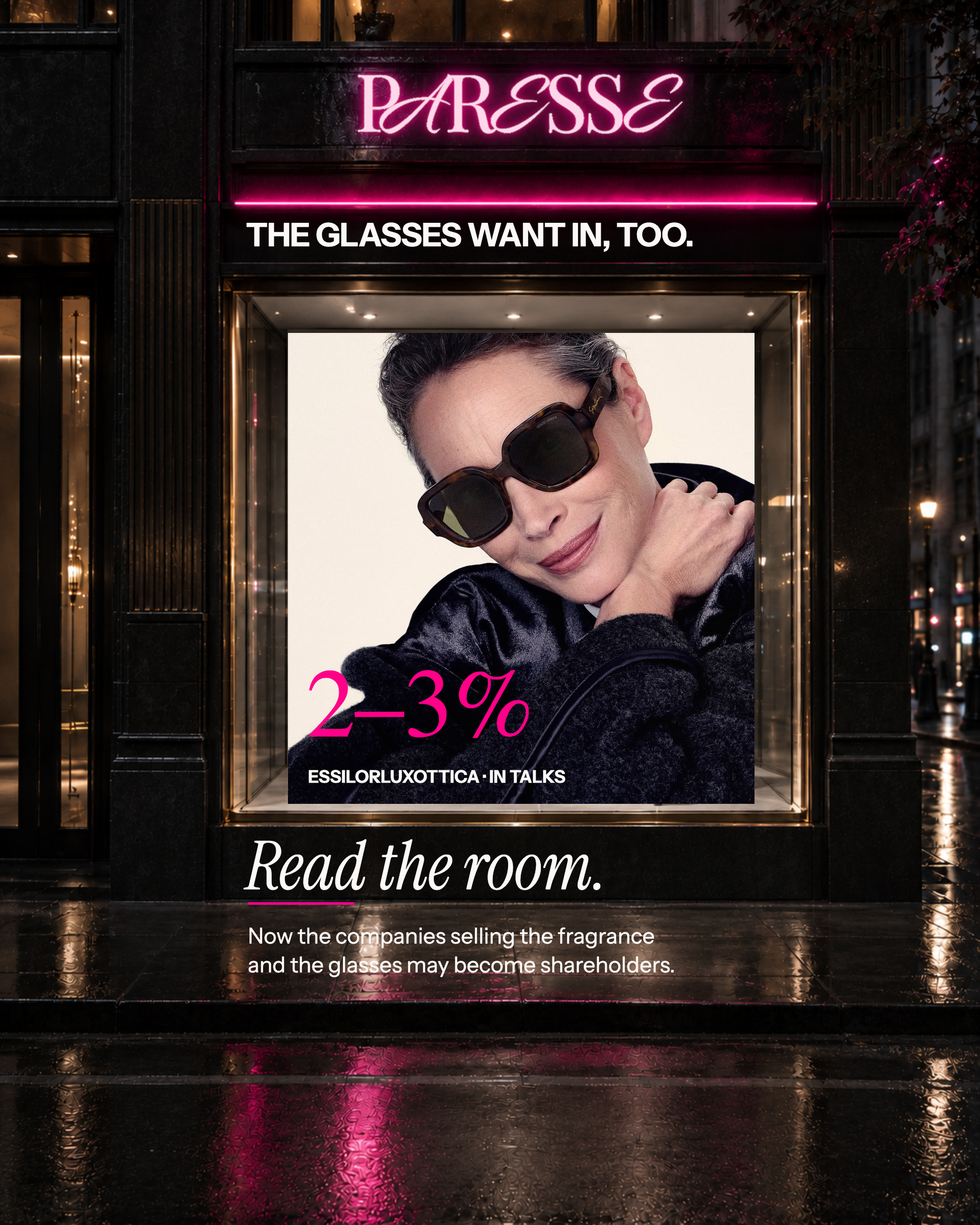
Room for another collection.
For the heirs and board, a useful way to compare prospective partners would be to examine their commitment to future fashion development alongside their existing commercial expertise.
One partner could simplify decisions. Several could broaden the expertise available. Either arrangement needs clarity about who funds experimentation and who approves a change of direction.
Before settling the structure, take a proposed collection through its rules: budget, creative approval, retail presentation. Where does support become a condition to keep things familiar?
The answer requires agreements and economics that are not public. Familiarity may prove an excellent foundation.
It should still leave something to discover.